Portrait in Seven Shades: Matisse
For the Portrait in Seven Shades piece—which we performed last week at Jazz at Lincoln Center’s Rose Theater—my goal was to select seven recognizable artists whose different styles would help create a contrast between each of the seven movements in the piece.
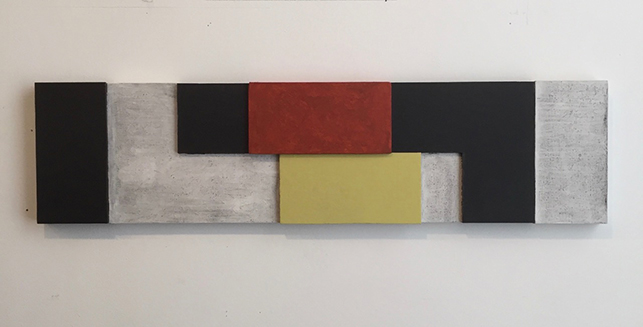
I’ve already talked about the “Monet” and “Dalí” movements, and today am moving on to “Matisse,” which very much expresses the reaction I have when I see Henri Matisse’s paintings such as Dance (I): joy. Read more
0 Comments | Tags: Dance, Henri Matisse, Jazz at Lincoln Center, Portrait in Seven Shades, Ted Nash, Thelonious Monk
Biography of a Whale

Gabriel Orozco. Installation view of Mobile Matrix (2006) at The Museum of Modern Art, New York. Graphite on gray whale skeleton. Biblioteca Vasconcelos, Mexico City. Photo: Charles Watlington. © 2010 Gabriel Orozco
Every work at a museum may compel a viewer to wonder how it was made or where it came from. However, there are some works whose genesis provokes a special degree of collective fascination. Gabriel Orozco’s Mobile Matrix, currently on view in MoMA’s Gabriel Orozco exhibition, is one such work. Read more
0 Comments | Tags: Biblioteca José Vasconcelos, Escrhichtius Robustus, Gabriel Orozco, Marco Barrera Bassols, Mexico, Mobile Matrix, Molly Nesbit, whale
Portrait in Seven Shades: Dalí
In my first post I talked about how seven master painters in MoMA’s collection inspired me to write Portrait in Seven Shades, an hour-long piece of music being performed by the Jazz at Lincoln Center Orchestra over the next several nights. The piece has seven movements, each dedicated to a different painter. Yesterday, I wrote about how I was inspired by Monet’s treatment of light and surface in his triptych Water Lilies. Today I’d like to talk about another movement in the suite, this one inspired by Salvador Dalí’s The Persistence of Memory.
Dalí’s work incorporates familiar images and objects in unfamiliar settings and combinations, creating a sense of discomfort or insecurity in the viewer. His paintings allude to violence, sexuality, and secrets living in one’s subconscious. The Persistence of Memory depicts a barren landscape populated by melting clocks; I was inspired by this surreal scene to develop an unusual time signature, 13/8. Embracing the effect of this painting I have found sounds and approaches to harmony that are familiar on their own, but take on an unsettling effect with the particular way they are combined.
In “Dalí,” which is basically a disguised blues, the persistent drum groove exposes a little of the aggressive quality of this painting, and the melody, played in thirds by trumpet and alto, exists in a different tonal center from the bass, like a lost creature searching. A flamenco-like clave—supporting a drum solo and emphasized by the orchestra’s hand clapping—references Dalí’s Spanish heritage.
0 Comments | Tags: Jazz at Lincoln Center, music, Portrait in Seven Shades, Salvador Dali, The Persistence of Memory
Meet Me: From Paper to Pixels
The Graphic Design and Digital Media departments work on the same floor in the MoMA offices, and though we may disagree on how many overhead fluorescent lights should be on (the correct answer is zero), we all enjoy getting the chance to work together. It’s not often that we get the chance to work on a project from its inception, so the Meet Me website was a unique opportunity.
Last week, Ingrid Chou explained the process of creating the lovely Meet Me publication. For the website, we worked with Ingrid and designer Sam Sherman (as well as the Education Department) to translate elements from the publication into a digital format. We also wanted to take advantage of some of the new features and frameworks we created for the MoMA.org redesign. Read more
1 Comments | Tags: Alzheimer's disease, Community and Access Programs, Meet Me, Web design
Portrait in Seven Shades: Monet
Portrait in Seven Shades tells a story about seven painters—not through words, as in a museum description, but through music. Many parallels can be drawn between art and music. Like painters, musicians talk of colors, layers and composition. Several stylistic descriptors—impressionistic, abstract, pop—are common to both fields. And of course there is the blues.
When Wynton Marsalis, artistic director of Jazz at Lincoln Center, asked me to compose a long-form piece, it didn’t take me long to come up with a concept that would truly inspire me to write an hour’s worth of music: it would be a piece with seven movements, each dedicated to a different painter. It was hard narrowing it down to only seven painters, as there are so many artists that I truly admire, but the list ultimately included Monet, Dali, Matisse, Picasso, van Gogh, Chagall, and Pollock. I wanted the listener to hear music that evokes images with which they are already familiar, and to see these paintings in a new, fresh way.
For the Monet movement, I used the triptych Water Lilies as a main inspiration. I feel that Monet embellished reality by diffusing it, using colors and textures to create fantasy. We feel nature, water, air – things that are very basic. When you stand up close to this sprawling canvas you lose sight of reality; instead you see the strokes, gesture, and textures.
I hope that you’ll return to INSIDE/OUT to experience the six other movements, as I’ll be writing about each one over the next seven days.
2 Comments | Tags: Jazz at Lincoln Center, Monet, music, Portrait in Seven Shades, Ted Nash, Water Lilies, Wynton Marsalis
New Acquisition: Feng Mengbo’s Long March: Restart

Feng Mengbo. Long March: Restart (installation view, Guangdong Museum, 2008). Video game installation (color, sound). The Museum of Modern Art. Given anonymously. © 2010 Feng Mengbo
We all know a little—and many of you know a lot!—about video games and gaming culture. Few of us, however, have actually attempted and succeeded in creating our own video game. Not only has the artist Feng Mengbo done so, but the video game he created is so large in scale that it requires installation in an exhibition hall. Mengbo started off this pursuit in a traditional enough way for an artist: in 1993 he created a series of paintings titled Game Over: Long March. But as the title hints, Mengbo had video games in mind all along—the forty-two paintings, which the artist called “game snapshots,” were clustered in a way so as to depict a “side-scrolling game,” but on canvas. A “side-scrolling game” or “side-scroller” is a video game in which the action is viewed from a profile-view camera angle, and your character generally moves from the left side of the screen to the right (think Super Mario Brothers). The character in Mengbo’s work is a small Red Army soldier sweeping his way across China, wiping out ghosts, demons, and deities, much in the vein of Mario wiping out Koopa Troopas on his way to rescue Princess Toadstool. Read more
1 Comments | Tags: China, Feng Mengbo, Game Over: Long March, Long March: Restart, Mao Zedong, Red Army, video game